



 Destinations
Planning a family trip to Ayodhya? From Ram Mandir darshan to Sarayu boat rides and the best child-friendly temples — the complete guide to Ayodhya with family.
Ayodhya is one of those rare destinations that works for every generation travelling together. Grandparents come for the darshan. Parents come for the culture and history. Children come for the boat rides, the sweets, and the spectacle of a city unlike anywhere else they have seen. The city is safe, entirely vegetarian, completely alcohol-free, and — since the opening of Ram Janmabhoomi Mandir in 2024 — significantly better equipped with roads, hotels, and facilities than it was even three years ago.
This guide is written specifically for families travelling to Ayodhya — with practical advice on what to do with young children, how to handle the crowds, what to pack, and how to structure your days so that everyone comes home having had a genuinely good time.
Why Ayodhya is a Great Family Destination
A few things make Ayodhya particularly well-suited to family travel:
It is entirely vegetarian and alcohol-free. You never have to worry about what your children are accidentally exposed to at a restaurant or street stall. Every food option — from street kachori to sit-down dinners — is pure vegetarian.
It is one of India's safer cities. The heavy security presence around Ram Janmabhoomi extends across the main tourist areas. The city has a respectful, devotion-driven atmosphere. Eve-teasing and petty crime are significantly lower here than in most large Indian tourist cities.
The cultural experience is genuine and immersive. For children who have grown up hearing the Ramayana, standing at Ram Janmabhoomi is not abstract — it is vivid and real. Many families report that an Ayodhya trip becomes a touchstone story their children carry for life.
It is manageable in 2 days. Unlike sprawling pilgrimage circuits, Ayodhya's main sights are concentrated in a relatively compact area. With a good hotel location (more on this below), most things are accessible on foot or by a short auto ride.
Planning Your Ayodhya Family Trip
Best Time to Visit Ayodhya with Family
October to February is the ideal window. Temperatures are comfortable (12–28°C), children can walk around without overheating, and the city is at its most beautiful during Diwali (Deepotsav) and the winter pilgrimage season.
Avoid April to June with young children. Ayodhya's summer temperatures regularly exceed 44°C, and the marble compounds around the temples get dangerously hot to walk on barefoot. If you must travel in summer, restrict outdoor activity to before 9:00am and after 5:30pm.
Ram Navami (March/April) is spectacular but extremely crowded — tens of lakhs of visitors descend on the city in 48 hours. Enjoyable for older teenagers who can handle large crowds, but difficult with young children or elderly family members.
How Long Should You Spend in Ayodhya with Family?
- 2 days: Ideal for most families. Covers all the major temples, the ghats, the boat ride, food walks, and the evening aarti without rushing.
- 3 days: Recommended if you are travelling with elderly grandparents (slower pace), young children under 5 (more rest time), or if you want to include the Panch Koshi Parikrama.
How to Reach Ayodhya
By air: Maharishi Valmiki International Airport (AYJ) has direct flights from Delhi, Mumbai, and Bengaluru. Best option for families travelling long distance — 15–20 minutes to the city centre by taxi.
By train: Ayodhya Dham Junction (AYDH) is well-connected from Lucknow (90 min), Varanasi (3.5 hrs), and Delhi (8 hrs overnight). Train travel with children is often the most comfortable option for medium distances.
By road: 130km from Lucknow (2.5 hrs) and 200km from Varanasi (4 hrs) on expressways. Many families from Delhi prefer a road trip via the Purvanchal Expressway.
Family-Friendly Things to Do in Ayodhya
1. Ram Janmabhoomi Mandir — Tips for Visiting with Children
Ram Janmabhoomi is the centrepiece of any Ayodhya visit and is entirely appropriate for children. The main idol — Ram Lalla as a child — is itself deeply relatable for young visitors. The 70-acre complex has wide paved paths, shade structures, and clear crowd management systems.
Family tips for Ram Janmabhoomi:
- Visit between 6:00am–8:00am for the shortest queues. Avoid weekends and festival days with young children.
- Shoes must be removed before entry. Pack socks for children — the marble can be hot in the afternoon.
- Strollers and wheelchairs are permitted inside the complex. There are dedicated paths.
- The queue can involve standing for 45–90 minutes even during off-peak times. Bring water and a small snack for children.
- Security checks are thorough — do not carry large bags, food, or sharp objects.
2. Sarayu Boat Ride — Universally Loved by Children
A 45-minute wooden boat ride on the Sarayu river is consistently the highlight of Ayodhya for children. The view of the ghats from the water, the boatmen's stories, and the gentle movement on the river make it a natural favourite. Book a private boat for families rather than sharing — it costs ₹300–₹500 and gives children room to move and ask questions without disturbing others.
Best time: 7:00am–9:00am (morning light, cool air) or 4:30pm–6:00pm (golden hour). Bring life jackets for young children if you have them — most boat operators provide them on request.
3. Hanuman Garhi — The Climb Children Enjoy
The 76-step climb to Hanuman Garhi is surprisingly enjoyable for children between ages 5–12 — it is the right length to feel like an achievement without being exhausting. The view from the top is panoramic and the colourful Hanuman idol inside the temple is striking for young visitors.
Tip: Carry children younger than 4 — the steps are steep. The climb takes about 10 minutes at a child's pace.
4. Kanak Bhavan — Colours and Decoration
Kanak Bhavan is the most visually spectacular temple for children in Ayodhya. The interior is richly painted and gilt, with elaborate floral decorations and life-size statues of Ram and Sita in ornamental jewellery that changes daily. Children find the colour and scale of the decoration genuinely exciting. Far less crowded than the main mandir, which makes the visit more relaxed for families.
Opening hours: 8:00am–12:00pm and 4:00pm–9:00pm.
5. Ram Katha Park & Museum — Interactive and Educational
The renovated Ram Katha Park near the Sarayu riverfront has a museum with dioramas, maps, and artefact displays tracing the history of Ayodhya and the Ramayana. Well-lit and bilingual (Hindi and English). Children who have some familiarity with the Ramayana story will find the dioramas particularly engaging.
Entry: Free. Air-conditioned — a good midday refuge in warmer months. Allow 60–90 minutes.
6. Evening Aarti at Ram Ki Paidi
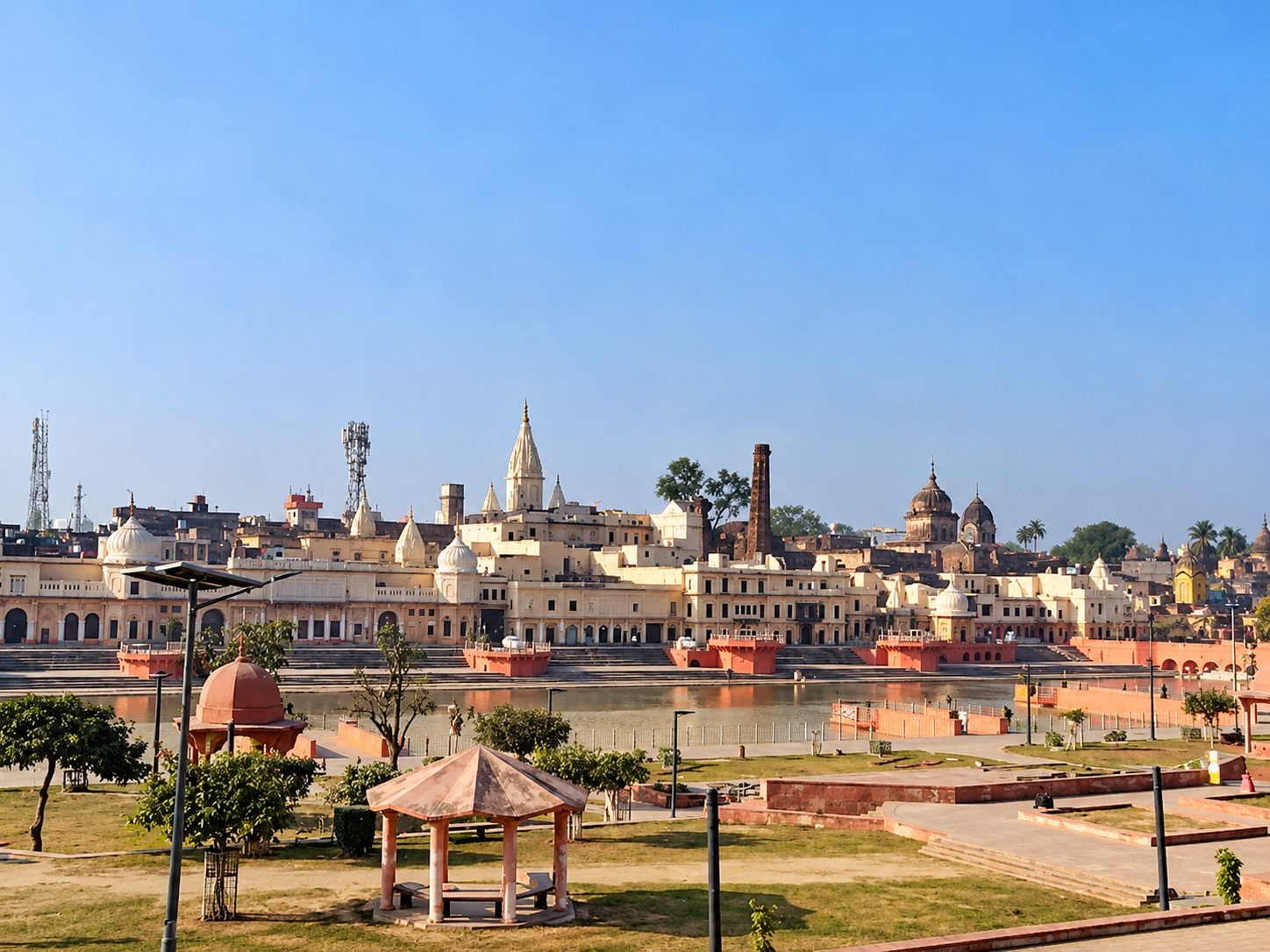
The Sandhya Aarti at the Sarayu Ghat is one of those experiences that affects children and adults equally. Dozens of lamps lit simultaneously, priests chanting, conch shells sounding across the river, and the illuminated Ram Janmabhoomi spires visible in the background — it is visually overwhelming in the best possible way.
Arrive 30 minutes before sunset to find a good spot on the ghat steps. Keep children close in the crowd. The ceremony lasts about 45 minutes. For young children who may get restless, position yourselves near the edge of the crowd where there is more space to move.
7. Sweet Shopping — The Children's Favourite Stop
No child leaves Ayodhya without being introduced to peda, kulfi, and malpua. Build a 30-minute sweet stop into your itinerary near Kanak Bhavan (Sita Ram Pedewale for peda) or the Hanuman Garhi crossing (malpua with rabri). Let children pick their own prasad — the packing and carrying of sweets becomes part of the experience.
2-Day Family Itinerary for Ayodhya
Day 1 — Arrival, Orientation & Evening
3:00pm: Check in and settle in. Take a short walk around the neighbourhood — let children explore the flower sellers, the small temples, and the general atmosphere at their own pace.
5:00pm: Hanuman Garhi. Climb the 76 steps for the sunset view over the city.
7:00pm: Evening Aarti at Ram Ki Paidi. Arrive early for a good spot on the ghat steps.
8:30pm: Dinner. The rooftop at Ramta by Avarna is a good option for families — the open-air setting, the views of Ram Janmabhoomi, and a menu that works across age groups (dal, paneer, plain rice and roti for younger children).
Day 2 — The Main Temple Day
6:00am: Wake up early and walk to Ram Ki Paidi for the morning Sarayu aarti (5:30am) or go directly to Ram Janmabhoomi for the first darshan of the day.
7:30am: Kachori-sabzi breakfast from Ram Halwai near Hanuman Garhi. Followed by kulhad chai for adults and kulfi or peda for children who want something sweet.
9:00am–11:30am: Ram Janmabhoomi Mandir darshan. Take your time inside the complex — there is more to see than the sanctum alone.
12:00pm: Kanak Bhavan temple. The colours will delight children.
1:00pm: Lunch. Thali at a dharamshala near Kanak Bhavan, or at the small restaurants below Hanuman Garhi.
3:00pm: Rest at the hotel during the hottest part of the afternoon. (This is non-negotiable with young children.)
4:30pm: Sarayu boat ride. Private boat from Ram Ki Paidi.
6:00pm: Ram Katha Park and Museum — evening walk through the riverfront park before or after the museum.
8:00pm: Final dinner. Sweet shopping on the way back to the hotel.
Eating in Ayodhya with Kids
The entirely vegetarian, no-alcohol environment makes Ayodhya unusually straightforward for families with children.
What children typically love in Ayodhya:
- Kulfi (from pushcart vendors near Ram Janmabhoomi) — ₹30–₹50
- Peda from Sita Ram Pedewale — Ayodhya's signature sweet, kids are unanimously fond of it
- Kachori-sabzi at Ram Halwai — most older children take to it immediately
- Malpua with rabri at Hanuman Garhi crossing — essentially a dessert for breakfast
Food safety tips:
- Stick to freshly cooked or freshly fried food from established stalls
- Avoid pre-cut fruit and open milk-based sweets (rabri, kheer) in summer
- Carry electrolyte sachets for young children, particularly in warmer months
Practical Family Tips for Ayodhya
What to Pack for Ayodhya with Children
- Comfortable walking shoes or sandals with straps (not flip-flops — the ghat steps are uneven)
- Small drawstring bags for shoes (required at all temples)
- Light cotton clothes, covered shoulders and legs for temple visits
- A good sunscreen and hat for daytime temple visits
- Hand sanitiser — essential at high-footfall pilgrimage sites
- A small insulated water bottle per person; refill at the free water stations throughout the complex
- Dry snacks for the Ram Janmabhoomi queue
Navigating Crowds with Children
Ayodhya's main temple areas get very crowded, particularly on weekends and festivals. With young children:
- Always keep one adult at the front and one at the back of the group
- Assign a "meeting point" with older children in case of separation (the main Ram Janmabhoomi gate is a reliable landmark)
- Avoid the busiest crowd times (Saturday afternoons, Sunday mornings, any major festival day) with children under 8
Accessibility
Ayodhya's main temple complex has dedicated accessible pathways and stroller access. The ghats have uneven steps — strollers are difficult to manage on the steps themselves, though the top of the ghat is paved and accessible. Ramta by Avarna has an elevator — rare among hotels in this part of Ayodhya.
Where to Stay in Ayodhya for Families
The single most important factor for a family trip to Ayodhya is hotel location. Having to navigate Ayodhya's congested lanes with children — particularly at 5:30am for the morning aarti or after a long day — adds significant stress to what should be a peaceful trip.
Ramta by Avarna is located a three-minute walk from Ram Janmabhoomi's entrance gate — the closest boutique hotel to the temple. For families, this means:
- No auto-rickshaw navigation at 5:00am
- Children can rest and return to the hotel during the midday break without a commute
- The rooftop gives children (and adults) a spectacular view of the illuminated temple at night from the safety of the hotel
Ramta has an elevator, clean modern rooms designed for comfort, a rooftop café with family-friendly menu options, and a team that assists with darshan timings and temple queues. Book at least 3–4 weeks ahead during October–March peak season.
Frequently Asked Questions — Ayodhya Family Trip
Is Ayodhya safe for families with young children? Yes — Ayodhya is considered one of the safest pilgrimage cities in Uttar Pradesh. The security presence around the main temple complex is extensive, and the city's devotion-driven culture creates a respectful, non-threatening environment. Standard crowd management precautions apply during peak times.
What is the best age to take children to Ayodhya? Children from age 5 upwards get genuine value from an Ayodhya trip — particularly if they have heard Ramayana stories at home. The boat ride, Hanuman Garhi climb, and Kanak Bhavan colours appeal to younger children. Older children (10+) can engage meaningfully with the history and spiritual significance of the city.
Can we visit Ram Mandir with a stroller? Yes. The Ram Janmabhoomi complex has designated accessible pathways that accommodate strollers and wheelchairs. The ghat steps at Ram Ki Paidi are not stroller-accessible, but the top of the ghat (where most people stand for the aarti) is paved and manageable.
What should we not miss in Ayodhya with family? The five non-negotiables for a family trip: Ram Janmabhoomi darshan, the morning or evening Sarayu Ghat aarti, the Sarayu boat ride, Kanak Bhavan, Hanuman Garhi and the sweet shopping circuit near Hanuman Garhi.
How much should we budget for a 2-day Ayodhya family trip? Excluding flights and hotel: ₹2,000–₹4,000 for a family of four covers all temple visits (free), food, the boat ride, auto-rickshaws, and sweets to take home. Ayodhya is an unusually affordable destination for families.
Ramta by Avarna is a boutique hotel one minute from Ram Janmabhoomi, Ayodhya. Ideal for families — elevator access, rooftop views, and complimentary darshan timing assistance. Book at stayavarna.com/